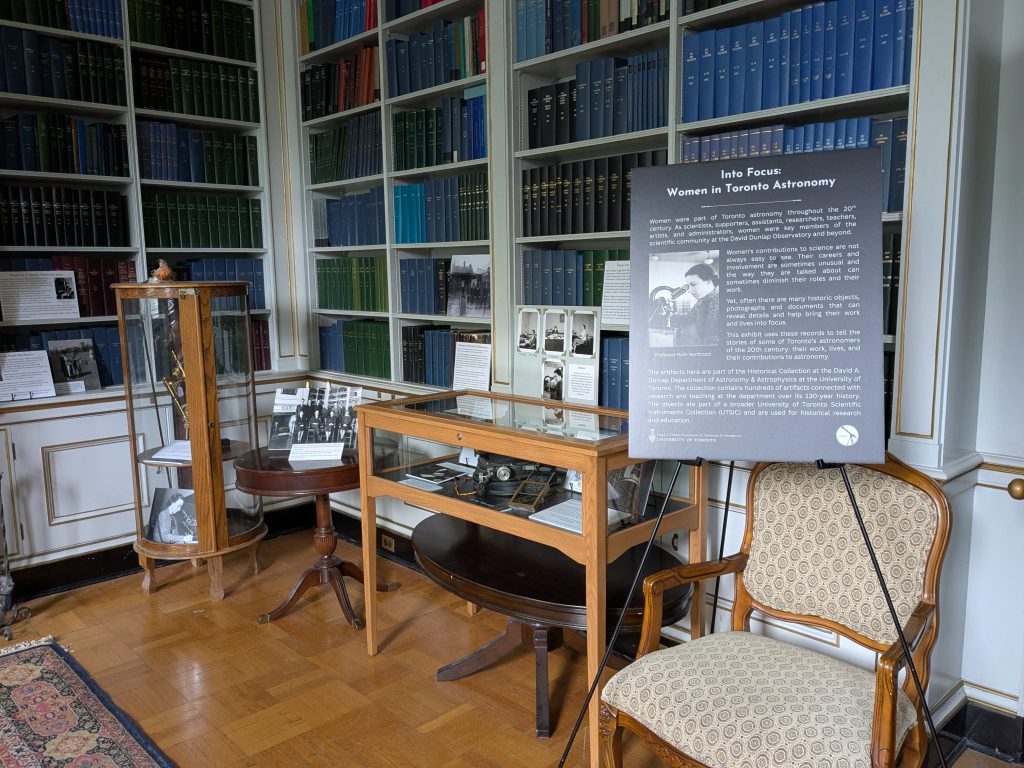
In late June 2026 I installed a new exhibit, Into Focus: Women in Toronto Astronomy, at the Richmond Hill David Dunlap Observatory.
Displayed in the observatory’s stunning 1930s library, this exhibit draws on artifacts from the historical collections of the David A. Dunlap Department of Astronomy and Astronomy and images from the University of Toronto’s Archive to examine the work and lives of women associated with astronomy in Toronto from the 1890s to the 1990s.
This is the culmination of a series of displays I’ve been running since March, which included a lunchtime pop-up in U of T’s Gerstein Library for International Women’s Day, and a day out at U of T’s Science Rendezvous. Into Focus, open now, will remain at the David Dunlap Observatory through to October 2026.
The most famous of the astronomical women featured is Helen Sawyer Hogg, who joined the U of T Department of Astronomy in 1935 when her husband, Frank Hogg, got a job there as a professor. At first, Sawyer Hogg, who had a PhD from Harvard and was an accomplished researcher, was conducting her own research program into variable stars in globular clusters as an near-unpaid “research assistant.” By the late 20th century, she was a professor, extremely prominent and influential in her field, and one of the most famous and celebrated women in science in Canada. She was made a Companion of the Order of Canada in 1976.
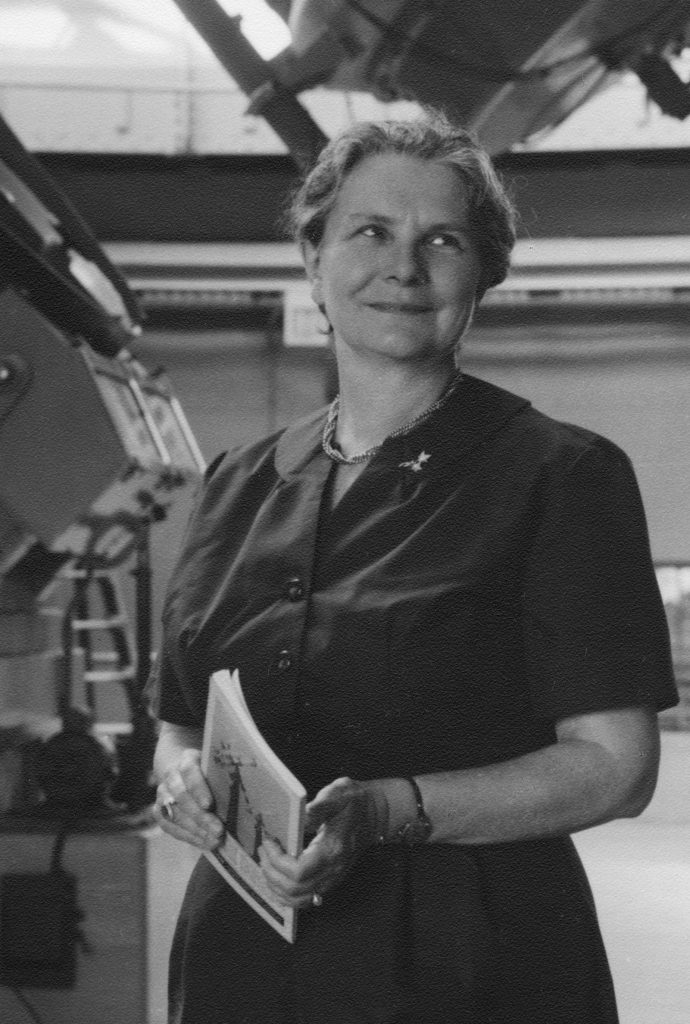
But Helen Sawyer Hogg was only one of the women in Toronto astronomy during the mid-20th century. At the David Dunlap Observatory, a number of women worked as researchers during this period, including Sawyer Hogg’s long-time colleague and friend Ruth Northcott, and F. Shirley Patterson, who studied first at U of T before getting her PhD at Harvard. Sawyer Hogg’s student, Christine Clement, joined the group in the 1960s, and was—for a while in the latter part of the 20th century—the Department of Astronomy’s sole female faculty member.
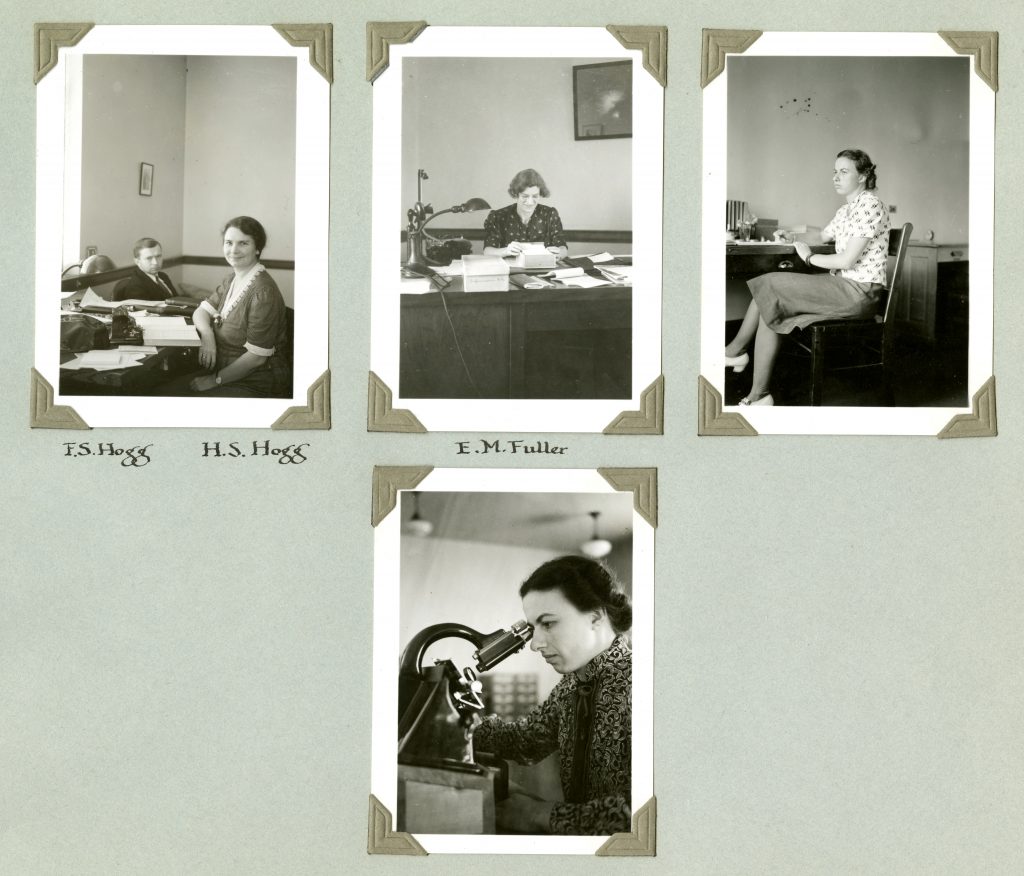
Alongside them are women whose involvement in science took some other form—but was no less important to the field. These people, and their varied contributions, are important to remember as well. These women include the DDO’s first librarian, Edna Fuller, family members of formally employed researchers, and the stately figure of Jessie (Bell) Dunlap. In the late 1920s, Jessie Dunlap agreed to fund the David Dunlap Observatory, granting the University of Toronto—and Canada—what was then the second biggest telescope in the world.
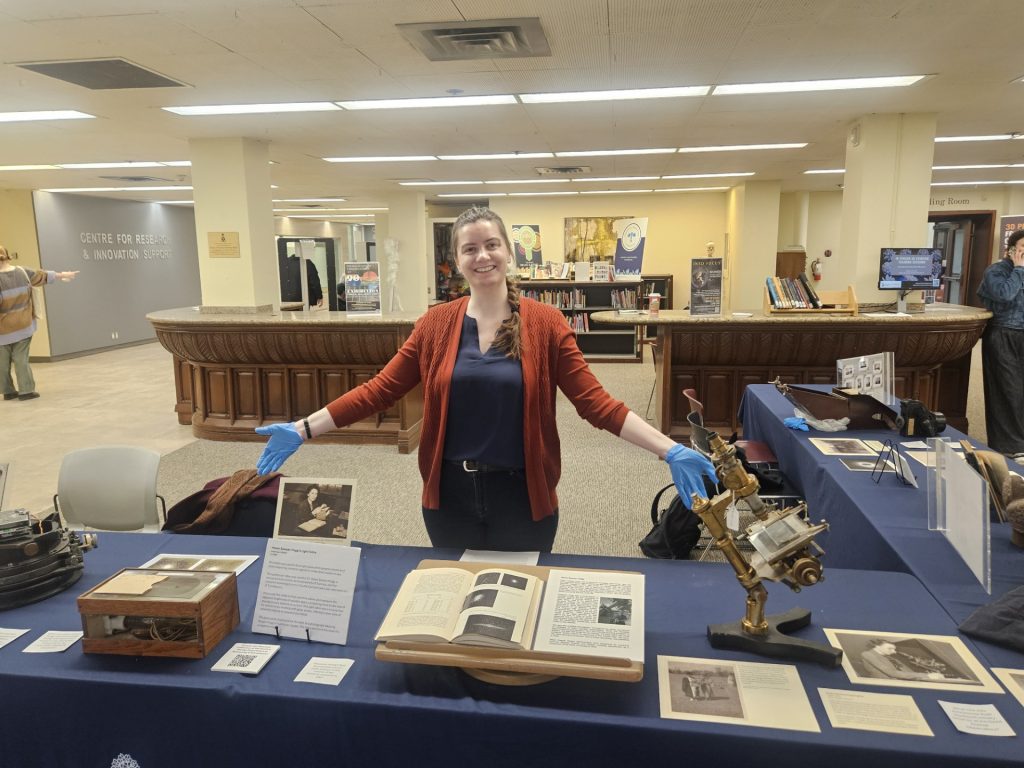
In one way or another, all these women were extraordinary. Presenting their lives in a way that didn’t sell them short was a real challenge. They each had full, multifaceted lives—science, family, hobbies and public presence and service—and it’s been impossible to represent everything about them. In selecting objects they used or that represented their work, and showing pictures of them at work and in their lives, I have tried to provide glimpses of the community of women in Toronto who, in the middle of the 20th century, were key to Canada’s astronomical activity.
It remains important to tell these stories. Today, only about 20% of astronomers in Canada are women—a percent that is about the same as the percentage at the David Dunlap Observatory in the late 1930s. This striking fact shows women working in science aren’t new. It’s important that we get to know their names and faces and see them as part of the full picture of the history of science in Canada.
Visit Into Focus: Women of Toronto Astronomy at the Richmond Hill David Dunlap Observatory during “Tour the DDO” open times from June to October. This is a free program! Learn more here.
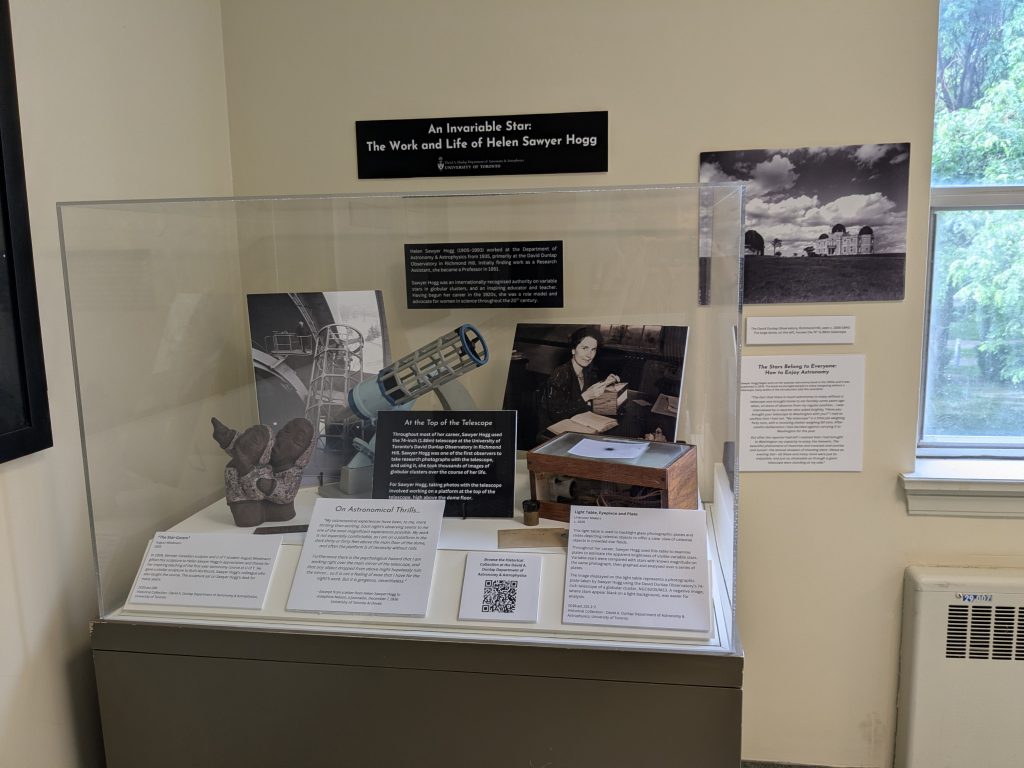
You can also find a small display, An Invariable Star: The Work and Life of Helen Sawyer Hogg, featuring objects and photographs surrounding Helen Sawyer Hogg at the David A. Dunlap Department of Astronomy & Astrophysics, at the University of Toronto. This is a subsection of a larger pop-up display, featured at a public lecture as part of the department’s Sawyer Hogg Visitorship program. The building is open 9–5pm weekdays, and the display can be found on the second floor of the building in the main hallway. Visiting the display requires climbing a flight of stairs.
Many thanks to the David A. Dunlap Department of Astronomy & Astrophysics, University of Toronto for continuing to support me in doing this work, and to the Richmond Hill David Dunlap Observatory for agreeing to partner with me and host this exhibit.
Thanks also to U of T graduate students Tashi Alashire, Ava Spurr and Sabrina Schoneveld who volunteered their time to assist in interpreting this material at the Gerstein Library and Science Rendezvous events in March and May, and to the University of Toronto Archives for their assistance with scanning images.
Recent Comments